
Scientists Detect Atmosphere on Earth-Like Exoplanet in Habitable Zone—A First
Astronomers have confirmed that a rocky super-Earth orbiting in another star's habitable zone has retained a stable atmosphere for billions of years. The detection of helium escaping from LHS 1140 b marks a major breakthrough in the search for potentially habitable worlds.
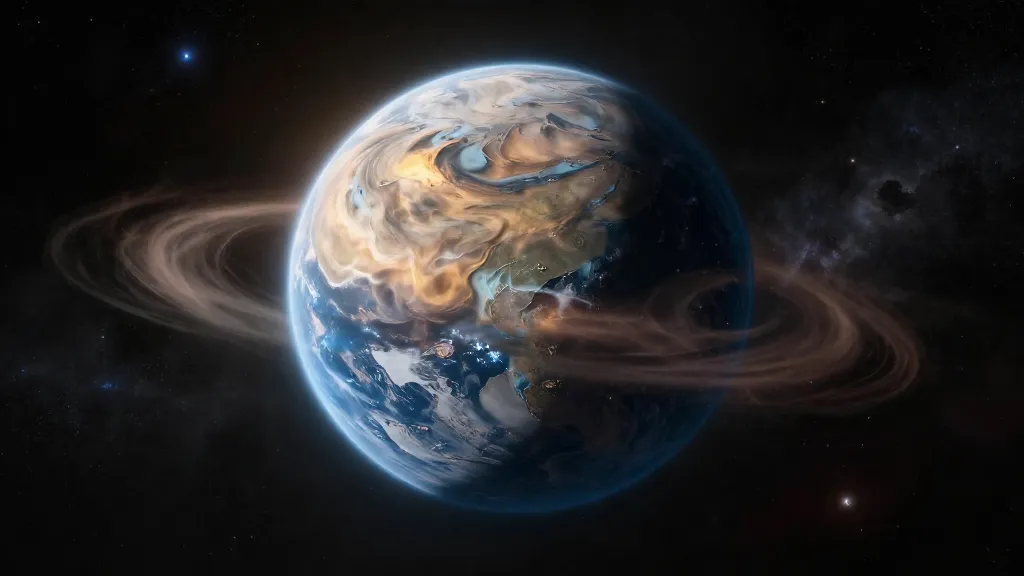
For the first time, astronomers have detected a stable atmosphere around a rocky planet orbiting in another star’s habitable zone—a discovery that could fundamentally reshape our understanding of where life might exist beyond Earth. The planet, known as LHS 1140 b, has retained its atmosphere for billions of years, providing the strongest evidence yet that Earth-like worlds in distant star systems can hold onto the chemical envelope necessary to support life.
A Landmark Detection
The breakthrough came through an unexpected signature: helium escaping from LHS 1140 b’s upper atmosphere. This detection, confirmed by astronomers studying the super-Earth, marks a watershed moment in exoplanet science. For decades, researchers have searched for signs that planets beyond our solar system could genuinely harbor life. Finding one with a confirmed, long-lived atmosphere moves that possibility from theoretical speculation into observational reality.
LHS 1140 b itself is a super-Earth—larger than our planet but smaller than Neptune—orbiting within the habitable zone of its parent star. The habitable zone is that crucial orbital sweet spot where conditions might allow liquid water to exist on a planet’s surface, a key ingredient for life as we understand it.
Why This Matters
The persistence of an atmosphere around LHS 1140 b tells us something profound: rocky planets in other star systems can hold onto their atmospheres long enough for complex chemistry—and potentially life—to develop. On Earth, our atmosphere has been shaped and reshaped over billions of years by geological processes, biological activity, and stellar influences. The fact that LHS 1140 b has maintained its atmospheric envelope suggests similar conditions might be possible elsewhere.
What to watch for as this research develops:
- Further spectroscopic analysis to identify other atmospheric gases beyond helium
- Studies of whether the planet’s surface conditions could actually support liquid water
- Observations of similar planets to determine how common stable atmospheres truly are
- Assessments of the planet’s magnetic field, which helps protect atmospheres from stellar wind
The Bigger Picture
This discovery opens a new frontier in the search for potentially habitable worlds. Rather than simply identifying planets in the habitable zone based on orbital calculations alone, astronomers can now look for direct evidence of atmospheric retention. It transforms the hunt from a numbers game into something more concrete.
The detection also highlights how technology continues to advance our cosmic perspective. Observing the faint signature of escaping helium from a planet orbiting a distant star speaks to the sophistication of modern astronomical instruments and analysis techniques.
As research continues, LHS 1140 b will likely become a focal point for future observations—a real-world testing ground for theories about habitability and atmospheric evolution on worlds beyond our solar system. The question is no longer whether such atmospheres can exist. The question now is: how many do, and what else might they tell us about the potential for life in the universe?