
Amateur Astronomer Discovers Earth-Like Planet by Hand-Analyzing NASA Data
Alexander Venner manually combed through retired Kepler telescope data and found a potentially habitable exoplanet that's now catching the attention of major observatories worldwide.
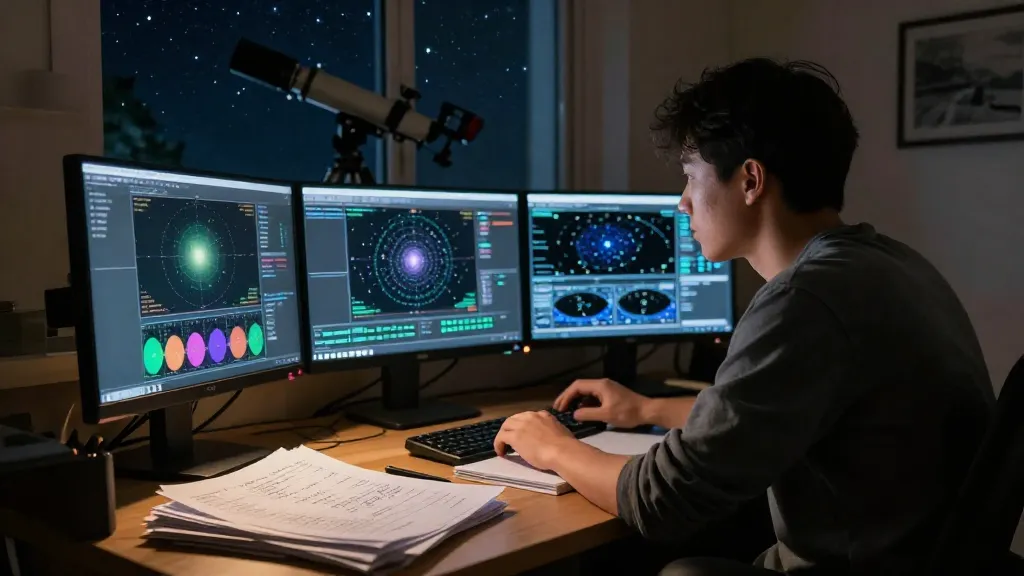
When Alexander Venner started manually sifting through data from NASA’s retired Kepler telescope, he probably didn’t expect to make a discovery that would soon have the world’s most powerful observatories turning their attention to a distant corner of the universe. But that’s exactly what happened when this dedicated citizen scientist uncovered what appears to be an Earth-like exoplanet with potentially habitable characteristics.
The Power of Human Eyes in Space Discovery
While sophisticated algorithms typically handle the massive datasets collected by space telescopes, Venner took a different approach. He meticulously examined Kepler telescope data by hand, picking his way through the information that the now-retired NASA instrument had collected during its planet-hunting mission. This painstaking manual analysis paid off in a way that even professional astronomers are finding remarkable.
The Kepler Space Telescope, which operated from 2009 to 2018, revolutionized our understanding of exoplanets by monitoring the brightness of stars and detecting the tiny dips in light that occur when planets pass in front of them. Even after its retirement, the treasure trove of data it collected continues to yield new discoveries in the hands of dedicated researchers like Venner.
What Makes This Planet Special
Reports suggest that Venner’s discovery exhibits Earth-like characteristics that have captured the attention of the astronomical community. The exoplanet appears to show signs of potential habitability, though specific details about its size, orbital characteristics, and atmospheric conditions remain to be fully analyzed by professional observatories.
Key aspects that make this discovery significant include:
- Earth-like characteristics suggesting potential habitability
- Detection through manual analysis rather than automated systems
- Confirmation worthy enough to warrant major telescope time
- Discovery by a citizen scientist working independently
Major Observatories Take Notice
The most telling sign of this discovery’s importance is the response from the professional astronomical community. Major observatories are now planning to focus their most powerful telescopes on Venner’s find, indicating that initial assessments suggest this could be a genuinely significant discovery rather than a false positive or marginal detection.
This level of attention from professional facilities represents a validation of both Venner’s work and the broader potential of citizen science in astronomical research. When observatories commit precious telescope time to follow-up observations, it signals that the scientific community views the discovery as worthy of serious investigation.
The Citizen Science Revolution
Venner’s success highlights the growing role of amateur astronomers and citizen scientists in making genuine contributions to our understanding of the universe. While professional astronomers have access to cutting-edge technology and computational resources, the human element—patience, intuition, and careful observation—remains irreplaceable in scientific discovery.
Why Manual Analysis Still Matters
Despite advances in artificial intelligence and automated detection systems, human analysis can sometimes catch patterns or anomalies that algorithms miss. The human eye and brain, when applied with dedication and knowledge, can identify subtle signals or unusual characteristics that might be filtered out by automated systems designed to look for specific patterns.
Looking Ahead
As major telescopes prepare to examine this newly discovered world in detail, the astronomical community will be watching to see what additional characteristics emerge. Follow-up observations will likely focus on determining the planet’s exact size, mass, orbital period, and most importantly, whether it lies within the habitable zone of its host star where liquid water could potentially exist.
The discovery also underscores the ongoing value of archived space telescope data. Even years after missions end, dedicated researchers continue to find new worlds hidden in the vast datasets collected by instruments like Kepler. Venner’s success may inspire other citizen scientists to dive into these digital archives, potentially leading to even more discoveries waiting to be uncovered by patient, careful analysis.
This remarkable find serves as a reminder that in our quest to understand the cosmos, sometimes the most significant discoveries come not from the most advanced technology, but from the most dedicated human curiosity and persistence.