
Hubble Discovers Ghost Galaxy That's 99% Dark Matter—First of Its Kind Ever Found
The Hubble Space Telescope has identified an unprecedented galaxy composed almost entirely of dark matter, detected only through its globular star clusters. This groundbreaking discovery could revolutionize our understanding of how dark matter shapes the universe.
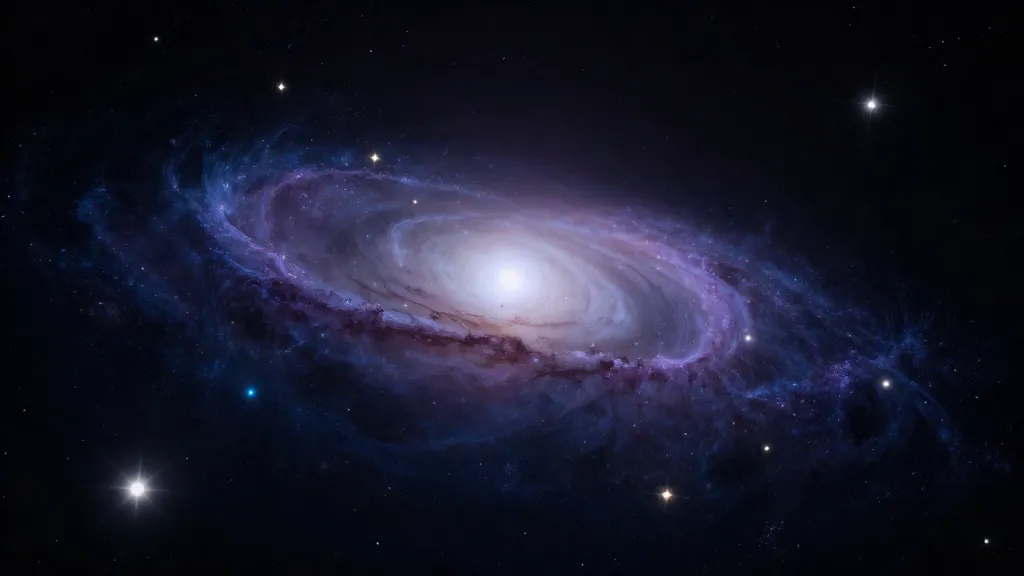
In the vast cosmic darkness, something extraordinary was hiding in plain sight—a galaxy so ghostly that astronomers could only detect it by following breadcrumbs left behind by ancient star clusters. The Hubble Space Telescope has made a discovery that reads like science fiction: a galaxy composed of 99% dark matter, making it one of the most mysterious objects ever found in our universe.
This isn’t just another space discovery. It’s the first galaxy ever detected solely through its population of globular clusters—those dense, spherical collections of old stars that orbit galaxies like cosmic lighthouses. Without these stellar breadcrumbs, this dark matter ghost would have remained completely invisible to our instruments.
The Cosmic Detective Work
Imagine trying to find an invisible person by spotting only their footprints in the snow. That’s essentially what Hubble accomplished with this remarkable find. The telescope’s keen eye spotted a collection of globular clusters moving through space in a pattern that suggested they were orbiting something massive—something that should have been a galaxy, but wasn’t showing up in any of the usual ways.
The discovery represents a cosmic detective story that spans millions of years. These globular clusters, some of the oldest structures in the universe, became the only witnesses to a galaxy that exists almost entirely in the shadow realm of dark matter.
What Makes This Discovery So Rare
Reports suggest that galaxies with such extreme dark matter compositions are exceptionally uncommon. While all galaxies contain dark matter—that mysterious substance that makes up roughly 85% of all matter in the universe—most also have substantial amounts of visible matter like stars, gas, and dust.
This newly discovered galaxy breaks that mold entirely. Observers note that finding a galaxy with 99% dark matter composition challenges our understanding of how galaxies form and evolve. It’s like discovering a city with only streetlights but no buildings, roads, or people.
Key characteristics that make this discovery groundbreaking:
- First galaxy detected exclusively through globular cluster observation
- Unprecedented 99% dark matter composition
- Provides new insights into dark matter distribution patterns
- Challenges existing galaxy formation models
The Dark Matter Mystery Deepens
Dark matter remains one of the biggest puzzles in modern astronomy. We know it exists because of its gravitational effects on visible matter, but we can’t see it directly. It doesn’t emit, absorb, or reflect light, making it essentially invisible except for its influence on the things around it.
This ghost galaxy represents an extreme example of dark matter’s dominance. While typical galaxies might contain 85% dark matter mixed with visible stars and gas, this cosmic phantom has taken minimalism to an entirely new level.
What This Means for Space Science
The discovery advances our understanding of how dark matter shapes the universe’s structure. Scientists have long theorized that dark matter forms the scaffolding upon which galaxies are built, but finding one that’s almost pure dark matter provides unprecedented insight into this process.
This finding could revolutionize our models of galaxy formation. If galaxies can exist with such extreme dark matter ratios, it suggests that the universe might harbor many more of these invisible giants than we previously imagined.
The Technology Behind the Discovery
Hubble’s ability to detect this cosmic ghost demonstrates the telescope’s continued relevance more than three decades after its launch. The precision required to identify and track globular clusters across vast distances showcases the remarkable capabilities of space-based astronomy.
The discovery also highlights how modern astronomical techniques are evolving. By using globular clusters as tracers, astronomers are developing new methods to detect objects that would otherwise remain completely hidden from our view.
Looking to the Future
This discovery opens up entirely new possibilities for astronomical research. If one galaxy can exist with 99% dark matter, how many others might be lurking in the cosmic shadows? Future surveys and more advanced telescopes may reveal that these dark matter ghosts are more common than we ever suspected.
The finding also raises intriguing questions about the nature of dark matter itself. Understanding how such extreme concentrations can exist and remain stable over cosmic time could provide crucial clues about this mysterious substance that dominates our universe.
As we continue to peer deeper into space, discoveries like this remind us that the universe still holds countless secrets. This ghost galaxy, invisible except for its ancient stellar companions, represents just one more mystery in the grand cosmic puzzle we’re still working to solve.