
James Webb Telescope Captures Dying Star's Final Gift to the Universe
The James Webb Space Telescope reveals stunning new details of the Helix Nebula, showing how dying stars like our sun scatter life-giving elements across the galaxy. This breathtaking 'Eye of God' image offers a preview of our sun's distant future.
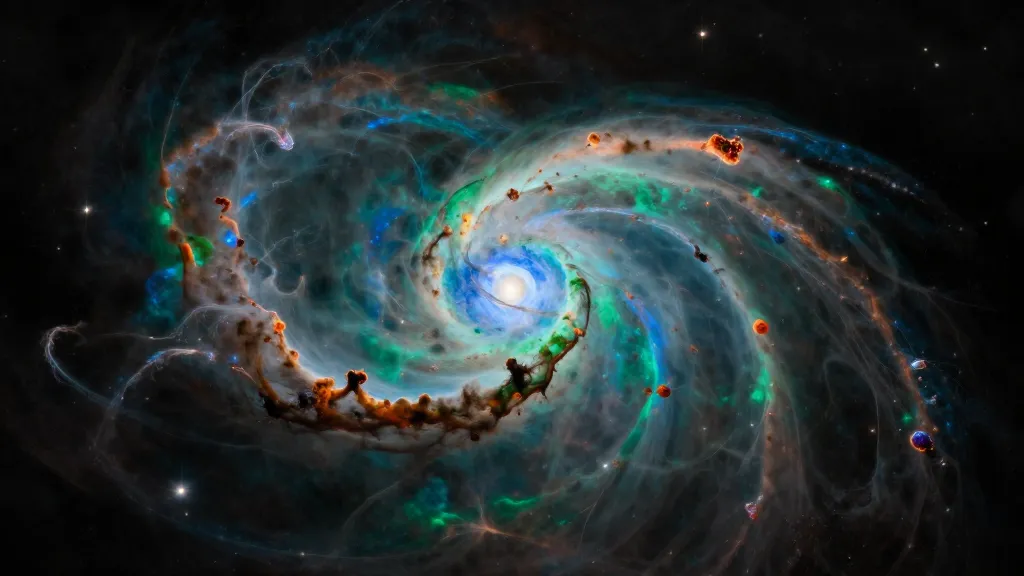
The cosmos has a way of turning endings into beginnings, and nowhere is this more beautifully illustrated than in a breathtaking new image from the James Webb Space Telescope. The observatory has captured the Helix Nebula in unprecedented detail, revealing how a dying star—much like our own sun—is performing one final act of cosmic generosity by scattering the very elements that make life possible throughout the galaxy.
The Eye of God Reveals Its Secrets
The Helix Nebula, often called the “Eye of God” for its striking appearance, showcases the spectacular death throes of a sunlike star. This latest James Webb image reveals intricate structures within the nebula that were previously hidden from view, offering scientists and stargazers alike a preview of what awaits our own solar system in the distant future.
The dying star at the nebula’s center has shed its outer layers, creating a magnificent tapestry of gas and dust that stretches across space. These expelled materials aren’t just cosmic debris—they’re a treasure trove of heavy elements forged in the star’s nuclear furnace over billions of years.
A Stellar Gift to Future Generations
What makes this celestial spectacle particularly remarkable is its role as a cosmic recycling center. As the dying star distributes its enriched material throughout the galaxy, it’s essentially seeding space with the building blocks necessary for new stars, planets, and potentially life itself.
Elements Essential for Life
The process captured in this image represents one of the universe’s most fundamental cycles:
- Carbon, oxygen, and nitrogen—key components of organic molecules
- Silicon and iron—essential for rocky planet formation
- Heavier elements that can only be created in stellar cores
- Complex molecular structures that serve as the foundation for chemistry
These elements, forged over the star’s lifetime through nuclear fusion, are now being scattered across vast distances, where they’ll eventually become incorporated into new stellar nurseries and planetary systems.
What This Means for Our Solar System
The image offers more than just scientific insight—it provides a glimpse into our sun’s eventual fate. In roughly 5 billion years, our own star will undergo a similar transformation, expanding into a red giant before shedding its outer layers and creating its own planetary nebula.
While this might sound ominous, the process represents the universe’s way of ensuring continuity. The carbon in our bodies, the oxygen we breathe, and the iron in our blood all originated in the hearts of ancient stars that underwent this same magnificent death cycle billions of years ago.
Unprecedented Detail from James Webb
The James Webb Space Telescope’s infrared capabilities allow it to peer through cosmic dust and reveal structures that were invisible to previous observatories. This new image of the Helix Nebula demonstrates the telescope’s ability to capture both the grand scale of stellar evolution and the intricate details of how dying stars enrich their galactic neighborhoods.
Reports suggest that the level of detail visible in this image is helping astronomers better understand the mechanisms by which stars distribute their processed materials, providing crucial insights into the cosmic processes that make complex chemistry—and ultimately life—possible throughout the universe.
The beauty of the Helix Nebula lies not just in its visual splendor, but in what it represents: a dying star’s final gift to the cosmos, ensuring that future generations of stars and planets will have the raw materials needed to create something extraordinary. In the grand theater of space, even death scenes can be acts of creation.