
Scientists Discover Mercury Is Still Geologically Alive After Finding Mysterious Bright Streaks
Strange bright lines discovered across Mercury's surface suggest the smallest planet is far from dead, overturning decades of scientific assumptions about our solar system's innermost world.
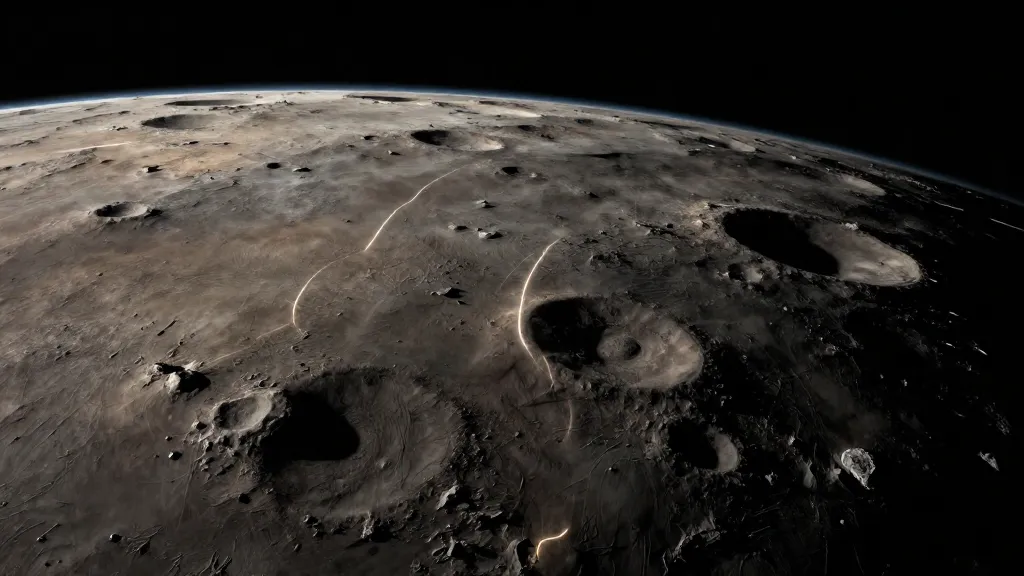
Scientists have long considered Mercury a lifeless, ancient world—a scorched rock frozen in time since the early days of our solar system. But stunning new observations have revealed something extraordinary: mysterious bright streaks crisscrossing the planet’s surface that suggest this supposedly “dead” world might actually be geologically alive.
The discovery is sending shockwaves through the planetary science community, forcing researchers to completely rethink their understanding of our solar system’s innermost planet.
The Mysterious Bright Lines That Changed Everything
These aren’t your typical planetary surface features. The bright streaks, formally known as lineae, appear as luminous scars etched across Mercury’s craters and slopes—like someone took a cosmic paintbrush and drew glowing lines across the planet’s dark, ancient surface.
Until recently, scientists had only catalogued a handful of these peculiar markings. But new research led by astronomer Valentin Bickel from the University of Bern in Germany has revealed far more of these enigmatic features than previously known, painting a completely different picture of Mercury’s geological activity.
Why This Discovery Is So Shocking
For decades, Mercury has been dismissed as geologically inactive—essentially a dead rock baked by the Sun’s intense radiation. The planet’s small size and proximity to our star led scientists to assume it had long since cooled and solidified, with no internal heat source to drive geological processes.
This new evidence suggests otherwise. The bright streaks appear to be exposed fresh material from very recent geological activity, indicating that Mercury’s interior may still harbor enough energy to reshape its surface.
What Makes These Streaks So Special
The bright lines stand out dramatically against Mercury’s otherwise dark, heavily cratered terrain. Reports suggest these features represent some of the youngest geological formations on the planet’s surface, potentially formed through processes that scientists are still working to understand.
Key characteristics researchers are examining include:
- The streaks’ unusual brightness compared to surrounding terrain
- Their distribution across different types of surface features
- The apparent freshness of the exposed material
- Their potential connection to internal geological processes
Rewriting Mercury’s Story
This discovery fundamentally challenges our understanding of planetary evolution. If Mercury is indeed still geologically active, it joins a select group of worlds in our solar system that continue to reshape their surfaces through internal processes.
The implications extend far beyond Mercury itself. Understanding how small, close-to-the-Sun planets maintain geological activity could provide crucial insights into planetary formation and evolution throughout the universe.
What Scientists Are Watching For Next
Researchers are now racing to understand the mechanisms behind these bright features. The leading theory suggests they result from recent geological activity that has exposed fresh material beneath Mercury’s weathered surface.
Observers note that additional study will be needed to determine exactly how recent this activity might be and what processes are driving it. The findings represent a significant shift in how planetary scientists view Mercury, transforming it from a static, ancient world into a potentially dynamic planet with ongoing geological processes.
This revelation serves as a powerful reminder that our solar system still holds many secrets—and that even the most thoroughly studied worlds can surprise us with unexpected signs of life, geological speaking.