
7,000-Year-Old Underwater Wall Found Off France Rewrites Prehistoric Engineering History
French marine archaeologists discovered a massive 120-meter granite wall dating to 5000 BC off Brittany's coast—the largest underwater construction ever found in France and evidence of sophisticated Stone Age coastal societies that predates famous megalithic monuments by 500 years.
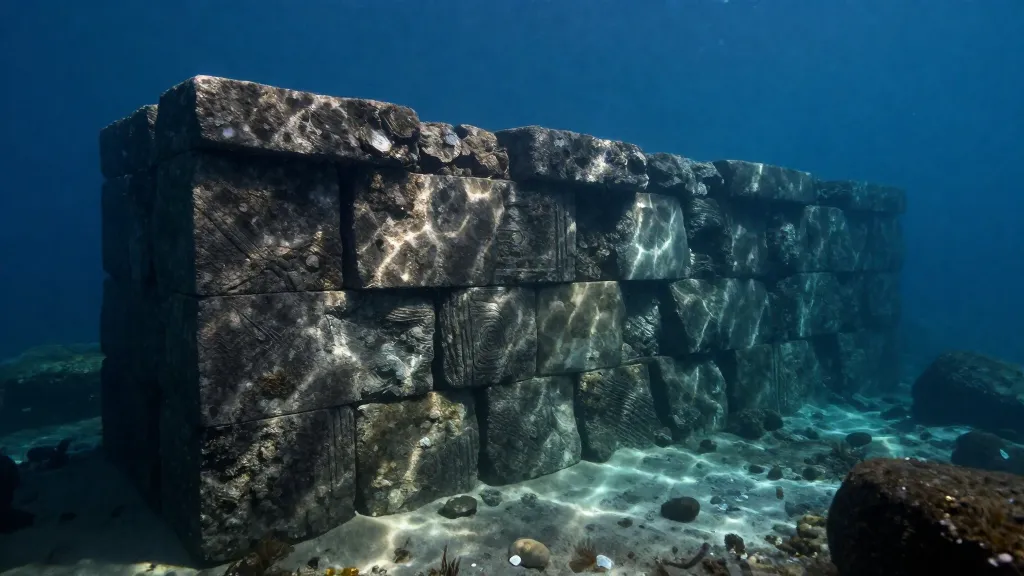
Seven thousand years ago, while most of Europe’s populations were still following migrating herds, a sophisticated society off the coast of Brittany undertook an audacious engineering project. They quarried massive granite blocks, organized hundreds of workers, and constructed a 120-meter wall beneath the waves—a feat so remarkable that it lay hidden underwater until 2025, challenging everything archaeologists thought they knew about Stone Age capabilities.
A Discovery That Rewrites Prehistory
French marine archaeologists have uncovered what may be the most significant underwater structure ever found in France: a monumental granite wall dating to approximately 5000 BC, discovered near Île de Sein off Brittany’s western tip. Now submerged under nine meters of water, this engineering marvel predates the region’s famous megalithic monuments—like the Carnac stones—by roughly 500 years.
The breakthrough began when geologist Yves Fouquet studied advanced radar depth charts of the seafloor. “Just off Sein I saw this 120-meter line blocking off an undersea valley,” he told Le Monde. “It couldn’t be natural.”
Between 2022 and 2024, divers from the Society of Archaeology and Maritime Memory (SAMM) conducted 59 dives totaling over 35 hours to document what they’d found. The results exceeded all expectations.
Engineering Marvel from the Stone Age
The wall measures an average of 20 meters wide and two meters high, composed of approximately 3,300 tons of carefully stacked granite blocks. But what truly astonished researchers were the monoliths—large standing stones protruding above the wall in two parallel lines, some reaching 1.7 meters in height.
These weren’t randomly placed. Divers discovered that the monoliths were originally set on bedrock, then the wall was constructed around them using slabs and smaller stones. The variety of construction materials and techniques demonstrates sophisticated planning and labor organization—a level of complexity that fundamentally challenges traditional assumptions about Mesolithic societies.
What to watch for:
- The monolith arrangement: Two parallel lines suggest intentional design, possibly for structural support or symbolic significance
- Material sourcing: 80% of granite blocks came from low-lying areas; monoliths from nearby reefs—evidence of specialized quarrying knowledge
- Construction phases: The structures suggest the landscape was actively managed and modified over extended periods
- Eleven additional structures: Researchers identified other stone formations in the area, indicating a complex engineered landscape
Two Theories, One Extraordinary Achievement
Researchers have proposed competing explanations for the wall’s purpose, each revealing different aspects of ancient ingenuity.
The Fish Trap Hypothesis
The first theory suggests the wall served as an elaborate fish trap. The protruding monoliths would have supported a net made of sticks and branches, catching fish as the tide retreated. This would represent a sophisticated food procurement system for maritime populations—a technology crucial to Mesolithic coastal communities throughout Europe. Similar wooden fish weirs dating to 6150-5750 BC have been found in Ireland, suggesting this was a widespread practice.
The Coastal Defense Theory
The alternative hypothesis is equally compelling. During the period when the wall was constructed, sea levels were rising at dramatic rates—between 5.2 and 8.4 millimeters per year. This wasn’t gradual change; it was rapid enough that coastal populations would have witnessed significant transformation within a single generation.
When originally built, the wall stood at the shoreline between high and low tide marks. Its impressive solidity, evidenced by survival over seven millennia, suggests deliberate engineering by a community facing genuine environmental pressures. In essence, this could be humanity’s oldest sea defense system.
Echoes of Lost Legends
The discovery adds unexpected archaeological substance to ancient Breton folklore. For centuries, locals have told of sunken cities, most famously the legendary city of Ys, believed to lie in the Bay of Douarnenez—just kilometers east of where this wall was found.
The research team suggests something profound: “It is likely that the abandonment of a territory developed by a highly structured society has become deeply rooted in people’s memories. The submersion caused by the rapid rise in sea level, followed by the abandonment of fishing structures, protective works, and habitation sites, must have left a lasting impression.”
Could ancient legends preserve genuine cultural memories of real environmental catastrophe? The wall offers tantalizing evidence that they might.
Knowledge Transfer Across Millennia
Perhaps most intriguingly, the wall demonstrates remarkable continuity of knowledge between populations. Archaeologist Yvan Pailler notes there could have been “a transmission of know-how on extracting, cutting and transporting the stones between older Mesolithic hunter-gatherers and incoming Neolithic agriculturists.”
The monoliths resemble—but predate—Brittany’s later megalithic monuments by half a millennium. This suggests that as agricultural societies arrived around 5500-5000 BC, they didn’t arrive as superior conquerors introducing new technology. Instead, they may have encountered and learned from established coastal communities who had already mastered stone manipulation and monumental construction.
What This Changes
The Sein Island wall represents the oldest and deepest stone structure ever found in France at this significant depth. Its discovery opens entirely new avenues for understanding how prehistoric coastal communities adapted to environmental change, organized complex labor projects, and maintained sophisticated societies without agriculture.
The team identified eleven separate stone structures in the area, ranging from small fish weirs to larger protective walls. Some incorporated monoliths under one meter high; others featured the impressive two-meter standing stones. The landscape wasn’t wilderness—it was actively managed and engineered by human hands.
A Message From the Past
As sea levels continue rising today, the ancient wall serves as a poignant reminder. Coastal communities have faced—and ingeniously responded to—environmental challenges for millennia. Our ancestors didn’t retreat in the face of rising waters; they adapted, engineered, and persisted.
That 120-meter wall, built by people whose names we’ll never know, stands as testament to the resourcefulness and organizational capabilities of societies that lived seven thousand years ago. It challenges us to reconsider what we know about Europe’s prehistoric inhabitants and reminds us that human ingenuity in the face of environmental change is far older than civilization itself.