
Millions of Filipino Catholics Turn Religious Procession Into Anti-Corruption Protest
Barefoot Filipino Catholics used their annual Black Nazarene procession to express outrage over a major corruption scandal involving influential legislators. The massive religious gathering became an unexpected platform for political dissent.
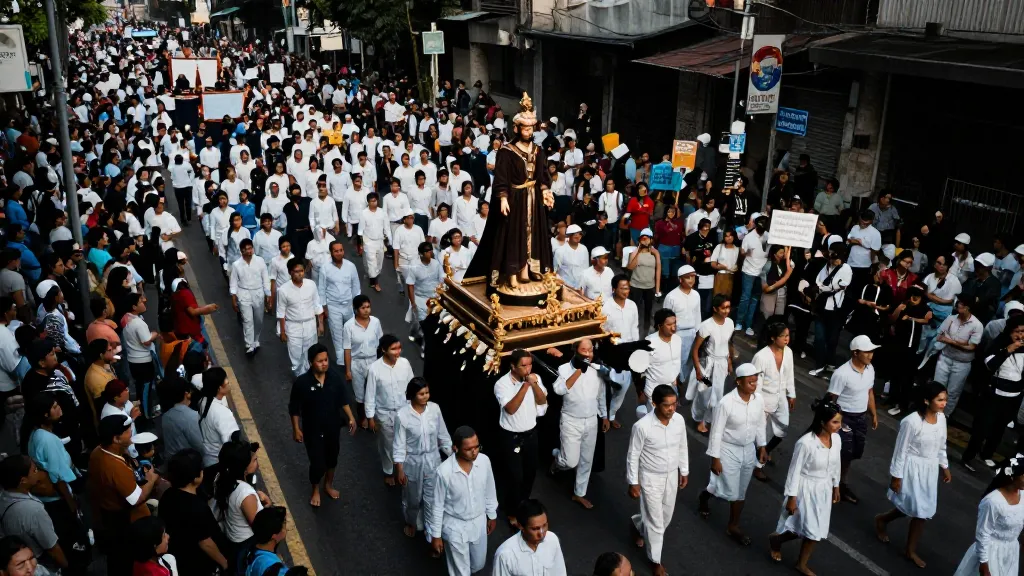
Millions of barefoot Filipino Catholics flooded the streets of Manila today, transforming their sacred annual Black Nazarene procession into an unexpected battleground against government corruption. What began as a deeply religious tradition honoring a centuries-old statue of Jesus Christ evolved into a powerful display of political dissent, as devotees used the massive gathering to voice their fury over a major corruption scandal involving influential legislators.
Sacred Tradition Meets Political Awakening
The Black Nazarene procession stands as one of the Philippines’ most significant religious events, drawing millions of faithful Catholics who believe touching the dark wooden statue brings miracles and blessings. Participants traditionally walk barefoot through Manila’s crowded streets in a show of devotion and penance.
This year’s procession, however, carried an electric undercurrent of political anger. Reports suggest that many participants wove anti-corruption messages into their prayers and chants, turning the religious ceremony into an organic protest movement.
When Faith Confronts Power
The convergence of religious devotion and political activism highlights the deep frustration many Filipinos feel toward their government. Observers note that the Catholic Church has historically played a crucial role in Philippine politics, and religious gatherings have often served as catalysts for social change.
Key Elements of Today’s Procession:
- Millions of mostly barefoot participants
- Traditional religious observances mixed with political messaging
- Focus on corruption scandal involving influential legislators
- Peaceful expression of outrage within religious framework
The timing proves particularly significant, as the corruption scandal continues to dominate headlines and erode public trust in government institutions.
The Power of Collective Voice
What makes this development especially noteworthy is how seamlessly political dissent merged with religious practice. Rather than organizing separate protests, Filipino Catholics used their existing spiritual gathering to amplify their concerns about government accountability.
The massive scale of participation demonstrates the breadth of public anger over the corruption allegations. When millions of people gather for any reason, their collective voice carries enormous weight, but the religious context adds layers of moral authority and cultural significance.
Beyond Manila’s Streets
This fusion of faith and political expression reflects broader tensions within Philippine society. The Catholic Church’s influence remains substantial in this predominantly Catholic nation, and religious leaders often speak out on social justice issues.
The corruption scandal involving influential legislators has clearly struck a nerve among ordinary Filipinos, many of whom struggle with poverty while watching their leaders allegedly abuse public trust for personal gain.
As the procession continues through Manila’s streets, it serves as a reminder that political accountability and religious values often intersect in profound ways. The barefoot faithful have found a way to honor their spiritual traditions while demanding better governance from their elected officials.
The images and stories emerging from today’s procession will likely resonate far beyond the Philippines, offering a compelling example of how citizens can peacefully express political dissent through existing cultural and religious frameworks.